

Insulation is a critical aspect of space capsule design, as it plays a vital role in protecting the occupants and equipment from the harsh environmental conditions of space. As a leading space capsule supplier, we understand the importance of high - quality insulation and the specific requirements that must be met. In this blog, we will explore the key requirements for a space capsule's insulation.
Temperature Regulation
One of the primary functions of insulation in a space capsule is to regulate temperature. Space is an extremely cold environment, with temperatures reaching as low as - 270°C in the shade. On the other hand, when exposed to direct sunlight, a space capsule can heat up significantly. Without proper insulation, these extreme temperature variations can damage sensitive equipment and pose a threat to the well - being of the crew.
The insulation material must have a low thermal conductivity. Materials with low thermal conductivity are poor conductors of heat, which means they can effectively reduce the transfer of heat between the inside and outside of the capsule. For example, aerogels are often used in space applications due to their extremely low thermal conductivity. Aerogels are made up of a porous structure that traps air, and air is a good insulator. This property allows aerogels to provide excellent thermal insulation with minimal weight.
In addition to low thermal conductivity, the insulation system should be able to handle rapid temperature changes. During a space mission, a capsule may move in and out of sunlight multiple times, causing sudden shifts in temperature. The insulation must be able to adapt to these changes without losing its effectiveness.
Radiation Protection
Space is filled with various forms of radiation, including solar radiation and cosmic rays. These radiations can be harmful to both humans and electronic equipment. High - energy radiation can cause damage to DNA in human cells, increasing the risk of cancer and other health problems. For electronic devices, radiation can cause malfunctions, data corruption, and even permanent damage.
Insulation materials need to have radiation - shielding properties. Some materials, such as polyethylene, are effective at shielding against certain types of radiation. Polyethylene contains a large number of hydrogen atoms, which can absorb and scatter radiation particles. Another approach is to use a multi - layer insulation (MLI) system. MLI consists of multiple layers of thin films separated by a low - density spacer material. This system not only provides thermal insulation but also offers some degree of radiation protection by reflecting and scattering radiation.
Weight and Volume Constraints
In space exploration, every gram of weight matters. The heavier the space capsule, the more fuel is required to launch it into space, which increases the cost and complexity of the mission. Therefore, the insulation material must be lightweight. As mentioned earlier, aerogels are an ideal choice in this regard because they have a very low density.
Volume is also a constraint. Space capsules have limited interior space, and the insulation should not take up too much room. The insulation system needs to be designed in a way that maximizes its performance while minimizing its physical footprint. For example, flexible insulation materials can be used to conform to the shape of the capsule's interior, making efficient use of the available space.
Durability and Long - term Performance
A space capsule may be in space for an extended period, sometimes for months or even years. The insulation must be durable enough to withstand the rigors of the space environment. This includes resistance to micrometeoroid impacts. Micrometeoroids are small particles that travel at high speeds in space, and they can puncture or damage the insulation if it is not strong enough.
The insulation material should also be resistant to degradation over time. Exposure to radiation, extreme temperatures, and the vacuum of space can cause materials to break down. For example, some polymers may become brittle and crack under long - term exposure to radiation. Therefore, the insulation needs to be made from materials that have good long - term stability.
Fire Resistance
Fire is a significant hazard in a confined space like a space capsule. In the microgravity environment of space, fires behave differently than on Earth. They can spread more easily and are more difficult to extinguish. The insulation material must be fire - resistant to prevent the spread of fire in case of an ignition.
Materials with high fire - resistance ratings, such as certain types of ceramics, can be used in the insulation system. These materials do not burn easily and can help contain a fire if it occurs. Additionally, the insulation should be designed in a way that minimizes the release of toxic gases in the event of a fire.
Compatibility with Other Systems
The insulation system must be compatible with other systems in the space capsule. For example, it should not interfere with the operation of the ventilation system. The ventilation system is responsible for maintaining a proper air supply and removing carbon dioxide from the capsule. If the insulation blocks the air flow or causes air to become stagnant, it can lead to a build - up of harmful gases and affect the health of the crew.
It also needs to be compatible with the electrical systems. Some insulation materials may have electrostatic properties that can cause problems for sensitive electronic equipment. Therefore, the insulation should be carefully selected to ensure that it does not cause electrical interference.
Our Product Offerings
As a space capsule supplier, we offer a range of insulation solutions that meet the above requirements. Our insulation systems are designed using the latest materials and technologies to provide the best possible protection for your space missions.
We have Outdoor Prefab Cabin models that are equipped with high - performance insulation. These cabins are suitable for various space - related applications, such as short - term space stations or lunar habitats. The insulation in these cabins is lightweight, fire - resistant, and provides excellent temperature regulation and radiation protection.
Our Movable Apple House is another innovative product. It features a unique insulation design that maximizes the use of space while providing reliable insulation. The insulation in the Movable Apple House is durable and can withstand the harsh space environment for long periods.
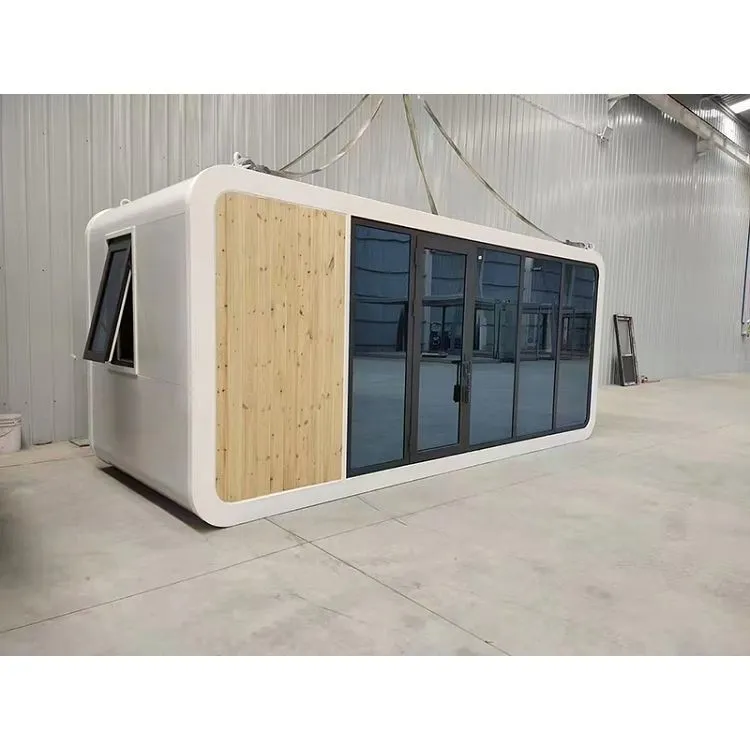
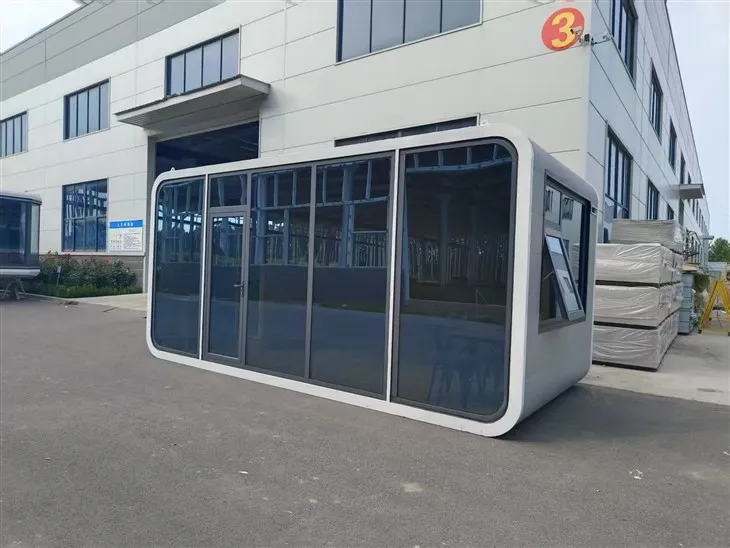
For those looking for a more compact solution, our Camping Space Capsule is an ideal choice. It is designed for short - duration space camping or small - scale space exploration. The insulation in this capsule is carefully engineered to meet the specific needs of a compact and lightweight design.
If you are interested in our space capsule products and insulation solutions, we encourage you to contact us for procurement and further discussions. Our team of experts is ready to provide you with detailed information and assist you in choosing the right insulation system for your space mission.
References
- "Fundamentals of Space Systems" by David W. Wertz and Jeffrey R. Larson
- "Spacecraft Thermal Control Handbook" by David G. Gilmore
- "Radiation Effects in Solids for Nuclear and Space Applications" by Peter D. Townsend