

In today's environment that pursues sustainable development and green building, more and more people are wondering: Are modular container houses environmentally friendly?
What are modular container houses?
What are modular container houses?
Modular container houses are residential or functional spaces constructed through a process of prefabrication in a factory and modular assembly on-site. Compared to traditional houses, these houses are characterized by "modularity," "lightweight design," and "rapid construction."
Here, "modular" means that the house construction adopts a process of factory prefabrication and on-site assembly; "container" means that the main structural modules are derived from shipping containers or similar steel structure boxes.
So, are modular container houses environmentally friendly?

Environmental Advantages
More Efficient Construction Process
Traditional construction generates significant amounts of construction waste, material waste, and site dust. Modular container houses, on the other hand, are often prefabricated in factories and assembled on-site, reducing on-site work time, construction disruptions, and waste.
Studies indicate that this type of construction can reduce construction waste to half or even less than that of traditional construction methods.

Modular and reusable
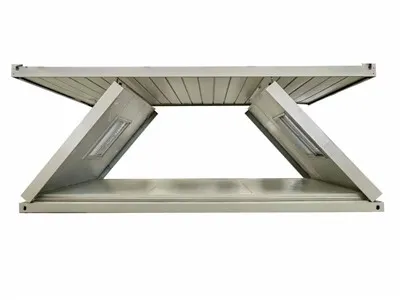
Modular structures facilitate disassembly, relocation, and expansion, extending the building's lifespan and reducing the waste of "build once, demolish once."
Therefore, from the perspective of "Are modular container houses environmentally friendly?", sustainability is a major advantage not only in initial construction but also in long-term operation.
Less Land and Environmental Disturbance
Because modular container houses are typically more compact and have shorter construction cycles, they cause less disturbance to the construction site, making them particularly suitable for urban land use, temporary facilities, and rural redevelopment. This means that on-site construction has a smaller impact on the ecology, neighborhoods, and traffic. From the perspective of "Are modular container houses environmentally friendly?", they also have advantages in terms of land and environmental disturbance.

Environmental Challenges and Considerations
While modular container houses offer numerous environmental advantages, there are still many challenges and considerations in their practical application.
Structural and Insulation Issues
Various insulation materials, such as rock wool, are used and can be customized to suit local climates.
Foundation and Transportation Energy Consumption
Although the container house structure itself is reusable, its transportation, hoisting, foundation construction, and on-site assembly still require resources and energy. If the location is remote, the transportation distance is long, or a large amount of hoisting equipment is used, its carbon emissions may increase.

Issues Regarding Standards and Service Life
While shipping containers boast high structural strength and durability, they can still face challenges such as coating aging, moisture corrosion, and weld fatigue. Inadequate maintenance can shorten their lifespan. Furthermore, in some regions, local building codes may be more stringent in defining and approving "container houses."
Are modular container houses environmentally friendly?
| Indicators | Analysis | Conclusions |
|---|---|---|
| Material Recycling Rate | Utilizing old containers reduces the need for new steel structures and improves recycling. | High |
| Construction Waste & Construction Period | Factory prefabrication and on-site assembly can reduce on-site waste and shorten the construction period. | Relatively High |
| Energy Consumption and Thermal Performance | Proper insulation, heat insulation, and thermal bridging prevention are necessary to realize energy-saving potential. | Highly Conditional |
| Movable/Scalable | Modular structures support disassembly, relocation, and expansion, extending service life. | Relatively High |
| Transportation and Installation Carbon Emissions | Large transportation, hoisting, and foundation construction distances, and high equipment energy consumption will increase negative impacts. | Neutral to Slightly Negative |
| Compliance and Post-Maintenance | High-quality renovation, compliance, and proper maintenance will result in a long service life; otherwise, environmental benefits will be affected. | Moderately Conditional |
In which scenarios are modular container houses most environmentally friendly?
Urban Backyard/Backyard Guest Rooms: Due to their small size, short construction period, and minimal disruption, modular container houses can be quickly built on urban land, achieving efficient utilization.
Holiday Villas, Country Homes/Eco-camps: In remote areas, they can be combined with solar energy, rainwater harvesting, and modular assembly advantages to showcase low-carbon living.
Temporary Buildings and Repurposed Uses: Such as event venues, temporary dormitories, and temporary office spaces, modular container houses can be dismantled and relocated after a short period, reducing one-time construction waste
Residential Expansion/Assembly: If there is already a traditional residence, modular container houses can be used as extension modules, such as part-time offices, rooms for the elderly, or guest rooms, minimizing interference with the main structure.
Extensions/Additional Housing: If a traditional house already exists, modular container houses can serve as extension modules, such as part-time offices, rooms for the elderly, or guest rooms, minimizing disruption to the main structure.

How to maximize the environmental benefits of modular container houses?
To ensure your modular container house is truly environmentally friendly, we recommend focusing on the following aspects:
Prioritize thermal insulation design, thermal bridging, and moisture control;
Optimize transportation and installation routes, choosing local resources, shortening lifting distances, and reducing transportation carbon emissions;
Ensure that the foundation, structure, safety, and building codes are all compliant to avoid significant waste caused by later demolition or reconstruction;
Design it as a detachable and expandable module for future relocation and reuse, extending the building's lifespan;
Regularly maintain it for corrosion prevention, leak prevention, and rust prevention to ensure structural lifespan and enhance long-term environmental value.
By following these recommendations, you can better answer the question "Are modular container houses environmentally friendly?" and ensure your project is not only green but also sustainable and economically viable.


Contact us to make your construction projects more environmentally friendly, more efficient, and more competitive in the market!