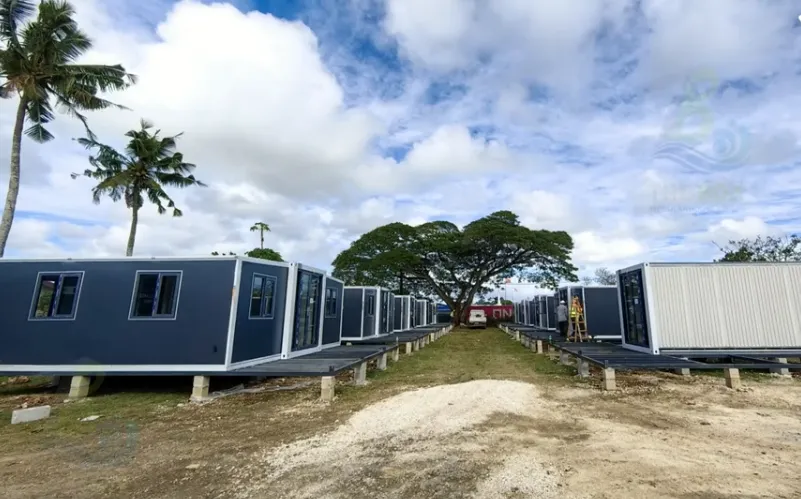
or a long time, people associated "housing" with lengthy construction periods, high labor costs, and complicated on-site work. However, as the global construction industry moves toward industrialization, sustainability, and digitalization, a new building model is rapidly emerging - modular housing.
In recent years, products such as expandable container houses, folding container homes, and space capsule houses have gradually evolved from "temporary buildings" into solutions for long-term living and commercial operations. This shift is not only an upgrade in product design, but also represents a deeper transformation in the logic of the construction industry itself.
Traditional Construction Is Facing New Challenges
Across the world, the traditional construction industry is facing several common problems:
Rising labor costs
Unpredictable construction schedules
Strong dependence on weather conditions
High levels of construction waste and carbon emissions
Lower land-use efficiency in urban areas
Especially in Europe, the Middle East, and island countries, where labor costs are high and construction approvals can be complicated, traditional building methods are becoming less efficient in meeting market demands.
At the same time, growing needs for tourism projects, temporary offices, emergency housing, and flexible living spaces are driving the market toward faster, more adaptable, and cost-effective construction solutions.
This is one of the key reasons behind the rapid growth of modular housing.


The Real Value of Modular Housing Is More Than Fast Installation
When customers first learn about expandable container houses, they are often attracted by features such as "installation within hours" and "easy transportation." However, these are only the surface-level advantages.
What truly drives the development of modular construction is the industrialized production logic behind it.
Traditional construction relies heavily on on-site labor and manual processes, while modular housing operates more like industrial manufacturing. Structural systems, electrical wiring, insulation, and interior finishes are largely completed in factories before shipment, leaving mainly assembly work at the project site.
This approach brings several major advantages:
1. Standardized Construction
Factory production ensures more consistent dimensions, structural quality, and product performance, making large-scale international procurement easier.
2. A Different Cost Structure
As labor costs continue to rise globally, modular housing reduces dependence on on-site workers through prefabrication and factory-based production.
3. Shorter Project Cycles
For hotels, camps, resorts, and commercial projects, earlier operation often means faster return on investment. Reducing construction time effectively improves capital efficiency.
4. Better Alignment With Green Building Trends
Compared with traditional construction, modular buildings offer advantages in material efficiency, waste reduction, and energy control during the building process, making them more aligned with global sustainability goals.